
Sailboat Survey Guide – Chapter 7: Sinking Risks and Critical Systems (Valves, Engine, Fuel)
No matter how strong a sailboat’s hull is, the holes drilled underwater (skin fittings) and the valves that close them are the weakest link in the vessel’s safety. Statistically, “failure of seacocks or hoses” ranks higher than heavy weather as a cause of boats sinking in harbors.
In this chapter, we will examine underwater through-hulls, hidden corrosion risks in the engine room, and fuel system standards.
1. Skin Fittings & Seacocks
The first thing a surveyor or informed buyer should do is locate all underwater through-hulls and identify their material.
A. Material Confusion: Brass or Bronze? Much of the hardware sold as “marine grade” is actually brass. However, standard brass suffers from dezincification in seawater.
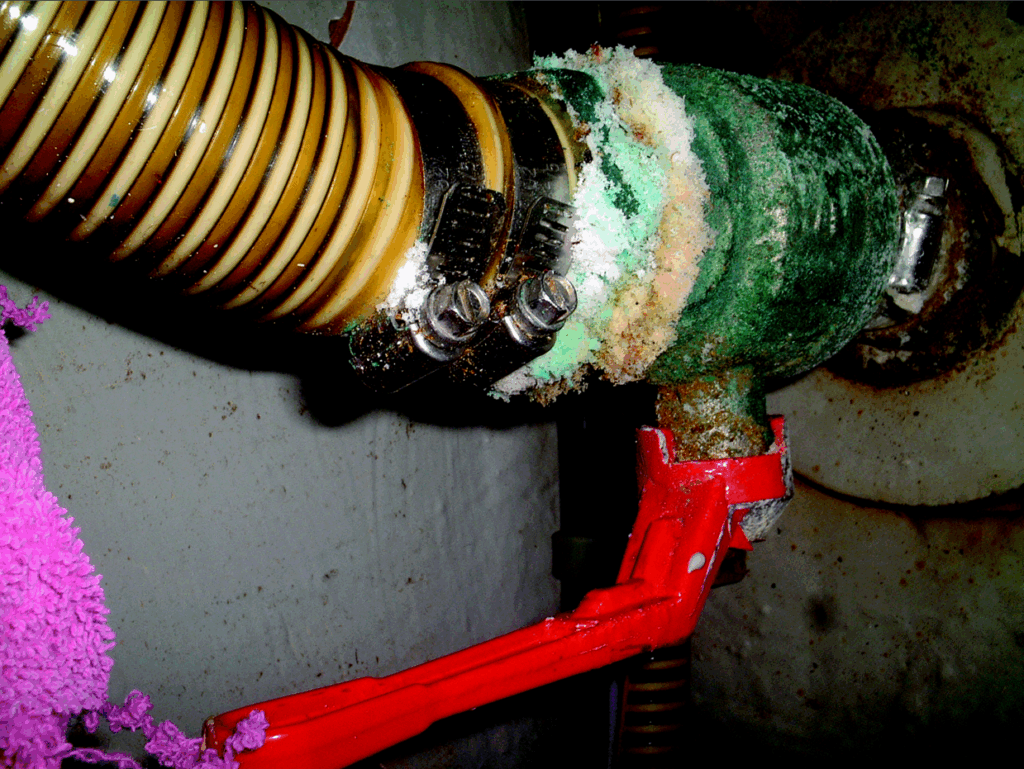
- Symptom: Sound brass is yellow. Brass that has lost its zinc becomes pinkish/red (carrot color) and porous, losing its metallic strength and becoming brittle.
- Standard: Quality metal valves should be made of DZR (Dezincification Resistant) brass or genuine Bronze.
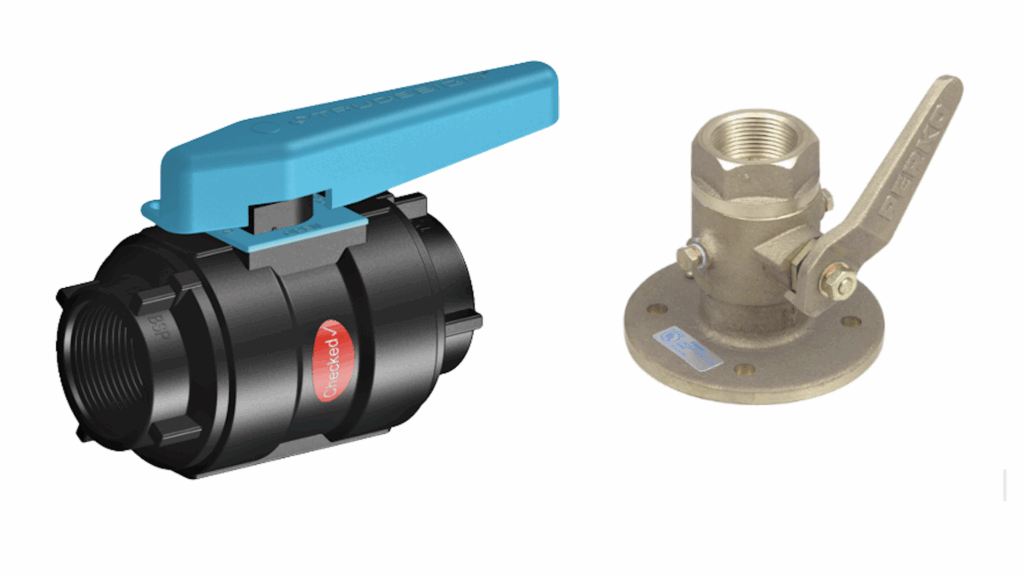
- Dangerous “Gate Valves”: Old-style, round-handled gate valves (like garden taps) are often made of low-quality brass. Surveyors know that even if these look fine externally, the body can shear off under impact.
- Percussion Test: Opening and closing the valve is not enough. The valve body and skin fitting should be lightly tapped with a metal object. Sound metal “rings,” while corroded metal sounds “dull” or “dead.”
B. The Danger of Plastic Fittings Standard white nylon fittings used just above the waterline become brittle over time due to UV exposure.
- Risk: If a heavy object (anchor, chain, etc.) hits this plastic in rough seas, the brittle flange can shear off, causing the boat to take on water. Standard nylon should never be used near the waterline.
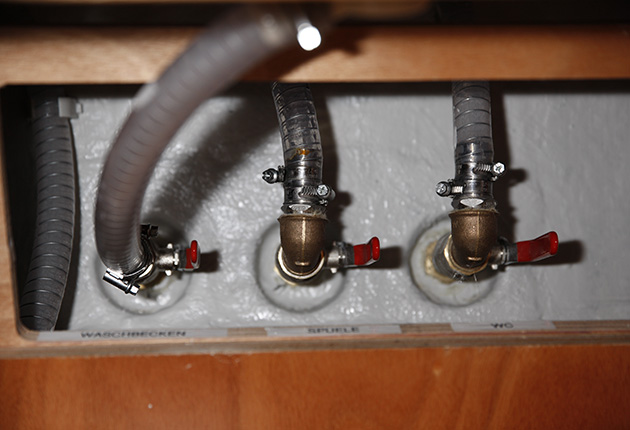
C. Hose Clamps and Cockpit Drains Everyone leaves cockpit drain valves open when leaving the boat. If these hoses detach, the boat sinks.
- Rule: Double clamps should be used on all hoses below the waterline.
- Hidden Corrosion: Stainless steel hose clamps often rust on the underside where they touch the hose, snapping unexpectedly.
2. Engine and Exhaust System (Engine Installation)
While the mechanical condition of the engine (compression test, etc.) is usually out of the scope of a standard hull survey, a “visual inspection” provides vital clues.
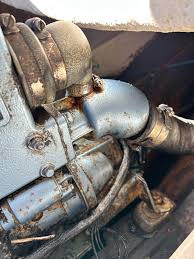
A. Exhaust Elbow (Injection / Mixing Elbow) One of the most common failure points. This cast iron part, where hot exhaust gas meets cold seawater, corrodes from the inside out and clogs with carbon.
- Tip: If there are rusty water trails or paint blistering on the elbow, the inside is likely corroded or blocked.
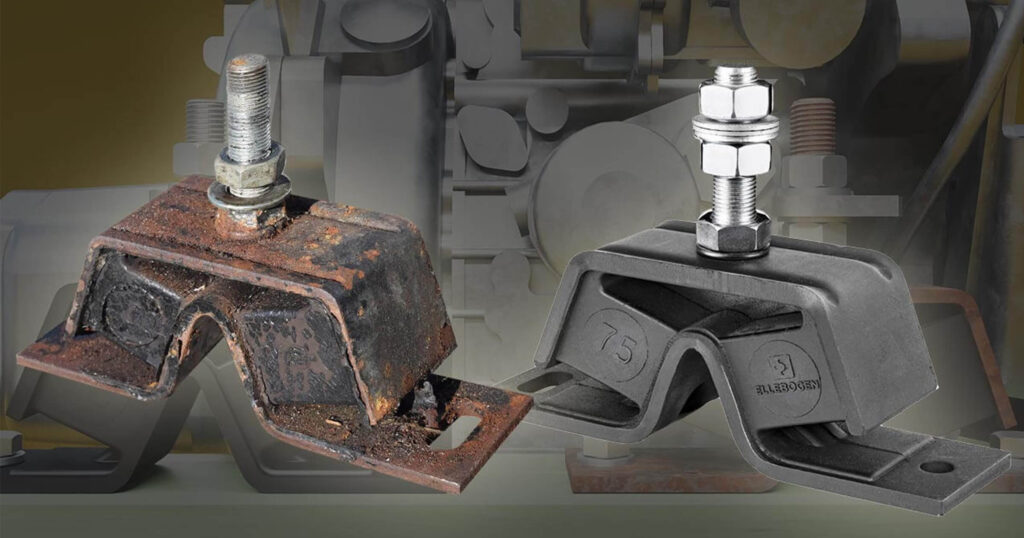
B. Engine Mounts and Alignment Try to lift the engine slightly with a lever.
- Has the rubber separated from the metal?
- Are the mount nuts covered in rust?
- Bad mounts ruin shaft alignment and rapidly wear out the cutless bearing (P-bracket bearing).
C. Anti-Siphon Loops If the engine is below the waterline, the exhaust line must have a waterlock and a high gooseneck. Also, an anti-siphon valve must be installed in the cooling water line. Otherwise, when the engine stops, seawater can siphon back into the exhaust and fill the cylinders (hydro-lock).
3. Fuel System
A. Fuel Tank Material
- Steel Tanks: Be careful if the boat is old and has a mild steel tank. The bottom of the tank usually sits on wooden bearers. Moisture trapped here rots the tank from the bottom up (the blind side). Many surveyors have poked a finger right through the rusty bottom of such tanks using a mirror.
- Stainless Steel or Plastic: The preferred safe materials in modern boats.
B. Hoses and Valves
- Fuel hoses must meet the fire-resistant ISO 7840 standard. Old, cracked, or automotive-grade PVC hoses must be replaced immediately.
- There must be an accessible shut-off valve immediately at the tank outlet to cut fuel in case of an engine room fire.
2025 Perspective and Current Notes
- The Composite Valve Revolution (TruDesign): In 2025, most modern boats use Glass Reinforced Polymer (FRP) valves (e.g., TruDesign) instead of metal. These do not corrode, are immune to electrolysis, are very strong, and resist freezing better than metal. If buying an older boat, replacing all brass valves with these composite ones is the best investment.
- Saildrive Diaphragm: Boats with saildrives have a thick rubber seal (diaphragm) between the hull and the drive unit. Manufacturers (Volvo Penta/Yanmar) typically recommend replacing this every 7 years. Proof of replacement (invoice) should be requested during the survey. Even if it looks visually perfect, insurance companies may insist on this interval.
- Diesel Bug: Modern bio-diesel blends are prone to bacterial growth if water accumulates in the tank. Always check the transparent bowl of the fuel pre-filter (separator) for black sludge (bacteria) or water.
Summary Advice: When buying a boat, the engine running is important, but the parts keeping the ocean out (valves, hoses, exhaust) are vital. A rusted 10 Euro hose clamp can sink a million-Euro yacht. The rule here is simple: “If in doubt, swap it out.”