Sailboat Survey Guide – Bonus Chapter 1: Standards, Regulations, and Survey Organizations
Before diving into technical inspections, one must understand the rules by which a boat is judged. Surveyors often face a dilemma: Most second-hand boats (especially classics) are not legally required to meet current new-boat standards. However, insurance companies, banks, and buyers want assurance that the boat is not just buoyant, but “safe” according to modern norms.
In this chapter, we decode the alphabet soup on your boat’s plaque (CE A, B, C), identify “must-have” certificates, and discuss how to choose the right surveyor.
1. Mandatory Standards: RCD and the CE Mark
Recreational Craft Directive (RCD): This is the “Bible” for all boats between 2.5m and 24m placed on the market in the EU and Turkey after June 15, 1998.
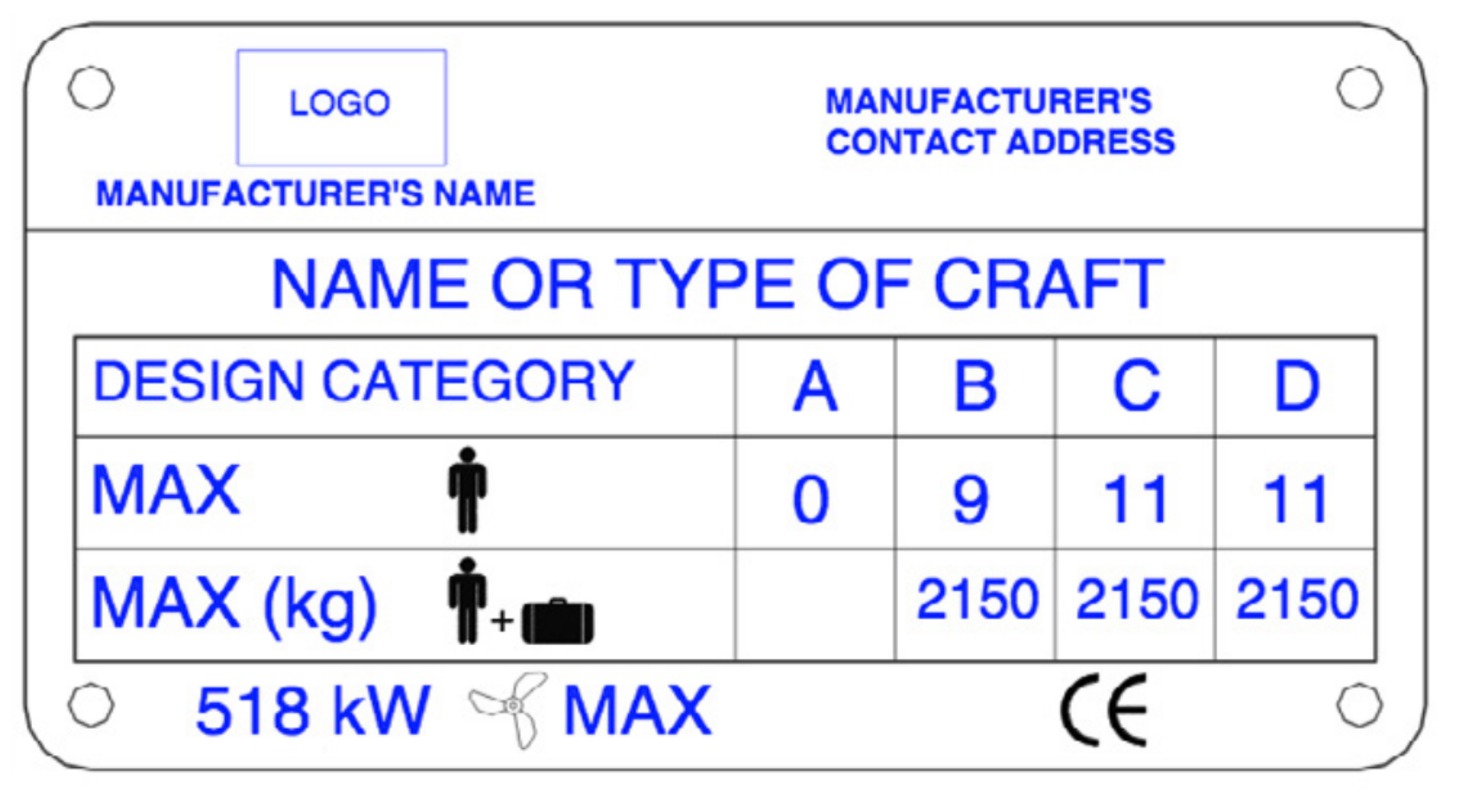
- The CE Plaque: Every RCD-compliant boat must have a builder’s plate, usually in the cockpit. This indicates the “Design Category”:
- Category A (Ocean): Winds exceeding Force 8 and waves over 4 meters.
- Category B (Offshore): Winds up to Force 8 and waves up to 4 meters.
- Category C (Inshore): Force 6 and 2 meters.
- Category D (Sheltered Waters): Lakes and rivers.
- 2025 Update (UKCA vs. CE): Post-Brexit, the UK has adopted the UKCA mark. If you are importing a used boat from the UK to the EU (or vice versa), check if the boat’s compliance status is still valid. In some cases, a costly “Post Construction Assessment (PCA)” may be required.
- Important Warning (Modifications): Industry experts emphasize that major post-construction modifications (e.g., increasing engine power by >15%, moving fuel tanks) can technically void RCD compliance. A surveyor should identify and report such significant alterations.
2. Safety Benchmarks: BSS and MCA
The RCD deals with construction. For systems safety (gas, electrics), surveyors look to other benchmarks.
Boat Safety Scheme (BSS): Originally mandatory for UK inland waterways, this standard is the global “Best Practice” guide for surveyors.
- Why it Matters: BSS rules are explicit on issues like gas locker drainage, battery restraint standards, and fuel line fire resistance. If a boat fails BSS standards, it is considered “at-risk” regardless of where it sails in the world.
MCA Code of Practice (Commercial Codes): If the boat you are buying will be used commercially (charter, training, etc.), it is subject to stricter rules by local authorities (MCA in the UK).
- The Difference: On a private boat, a bilge pump is recommended; under commercial codes, the pump’s capacity (liters per minute) is mathematically mandated. If buying an ex-charter boat, check if this safety gear is still onboard; it is often stripped before sale.
3. Who is the Surveyor? Organizations and Competence
Unfortunately, there is no global “Surveyor’s License.” Anyone with a flashlight can theoretically call themselves a surveyor. Therefore, the “Professional Bodies” the surveyor belongs to are vital.
Reputable Organizations:
- YDSA (Yacht Designers and Surveyors Association): Known for setting high standards and requiring continuous training for members.
- IIMS (International Institute of Marine Surveying): A globally recognized body covering both commercial and leisure vessels.
- RINA (Royal Institute of Naval Architects): More academic and engineering-focused.
- SAMS / NAMS: Reputable US-based organizations.
4. The Surveyor’s Liability: “Professional Indemnity”
The most critical advice given to boat buyers is this: Before shaking hands with a surveyor, ask one question: “Do you carry Professional Indemnity (PI) Insurance?”
- What is it? Surveyors are human and can make mistakes. If a surveyor misses a crack in the keel or corrosion in a seacock, and the boat sinks as a result, recovering your losses from the surveyor’s personal assets is extremely difficult.
- The Guarantee: PI Insurance is the only safeguard that covers financial losses resulting from a surveyor’s negligence or error. A surveyor without insurance, no matter how cheap, is a massive risk.