Sailboat Survey Guide – Final Chapter: The Surveyor’s Toolkit & Practical Checklist
This chapter is the “operational” heart of the series. It’s time to put the theoretical knowledge into practice in the field. Before starting a survey, the first question shouldn’t be “Where do I look?” but “What do I look with?”
This guide consists of two parts:
- Preparation: What you need in your bag.
- Execution: The step-by-step checklist.
PART 1: THE SURVEYOR’S TOOLKIT (Preparation)
1. Observation & Access
- High-Power Spotlight: Essential for dark bilges.
- Inspection Mirror / Endoscope: To see behind engines and under tanks.
- Digital Camera: To document and reach inaccessible areas.
- Magnifying Glass: For hairline cracks.
2. Testing Tools
- Hammers: Small pin hammer for hull sounding; large hammer for keel nuts/valves.
- Scraper (Tungsten): To remove antifouling without damaging gelcoat.
- Magnet: To test stainless steel quality.
- Knife/Chisel: To probe for rot or delamination.
3. Measurement & Recording
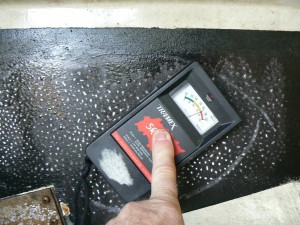
- Moisture Meter: For GRP and wood humidity.
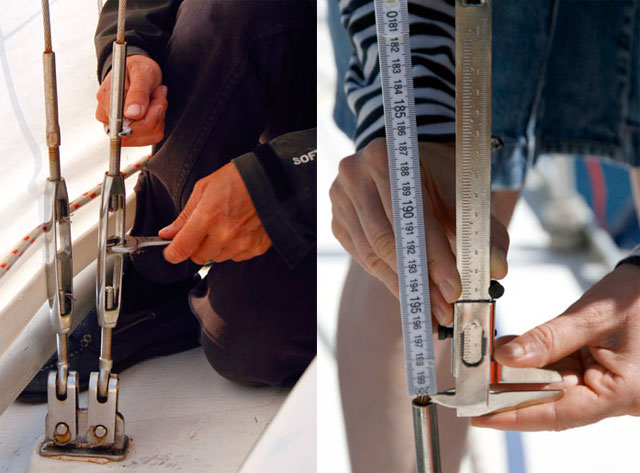
- Calipers/Tape Measure: For shafts, wires, and defects.
- Voice Recorder: Vital for taking notes in tight spaces.
4. Safety
- Dust Mask (P3): Never scrape antifouling without one.
- Coveralls/Gloves: Protect against chemical waste in bilges.
PART 2: PRACTICAL SURVEY CHECKLIST (Execution)
DISCLAIMER: This list does not replace a professional survey. Its purpose is to filter out “lemons” quickly.
A. ON THE HARD (Hull & Underwater)
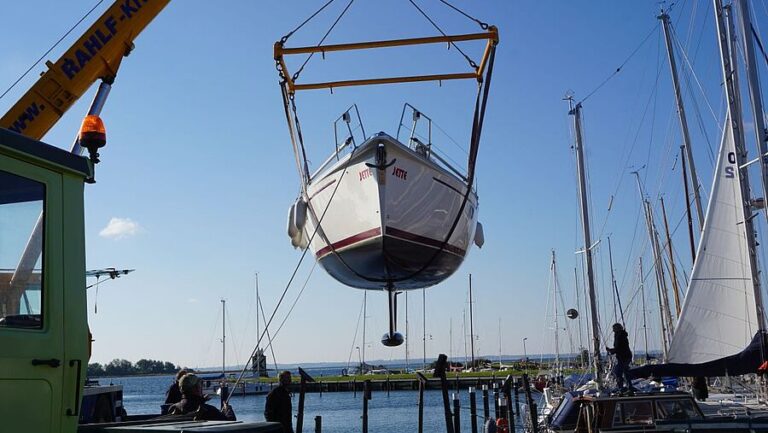
1. Hull
- [ ] Visual Scan: Check for ripples, depressions, or dull patches using grazing light.
- [ ] Osmosis: Are there blisters below the waterline? (Vinegar smell?).
- [ ] Impacts: Repair marks on stem or keel bottom?
- [ ] Propeller: Pink discoloration (dezincification)? Wobble on shaft?
- [ ] Cutless Bearing: Is there play/clunking when shaking the shaft?
- [ ] Anodes: Condition? (Passive or depleted?).
2. Keel
- [ ] “The Smile”: Crack/separation at the front of the keel-hull joint?
- [ ] Rust Weeping: Rust trails streaming down from the joint?
- [ ] Wiggle Test: Does the hull flex when the keel is pushed?
3. Rudder
- [ ] Shake Test: Does blade rotate on stock? Excessive bearing play?
- [ ] Water Sound: Sloshing sound inside?
- [ ] Split: Split along the leading edge?
B. DECK & RIGGING
4. Deck Structure
- [ ] Walk Test: Is the foredeck soft/spongy? (Delamination).
- [ ] Teak: Visible screw heads? Missing plugs? Debonding caulking?
- [ ] Stress Cracks: Cracks around cleats/winches?
5. Mast & Rigging
- [ ] Mast Base: Bubbling/corrosion at the step?
- [ ] Wires (Meathook Test): Run cloth on terminals. Does it snag?
- [ ] Turnbuckles: Cracks/bends? Split pins installed?
- [ ] Stanchions: Do bases move/crack deck when pushed?
C. INTERIOR & STRUCTURAL
6. Bilge & Keel
- [ ] Keel Bolts: Rusty nuts? Solid backing plates?
- [ ] Liquid Check: Water in bilge? (Taste/Oil check).
- [ ] Bulkheads: Tabbing separating/cracked/rotten? Doors close properly?
7. Seacocks
- [ ] Function: Do ALL valves open/close?
- [ ] Sound Test: Tap with metal. Ring (solid) or thud (corroded)?
- [ ] Hoses: Double clamps?
D. SYSTEMS
8. Engine
- [ ] Cold Start: Immediate start? Smoke color?
- [ ] Visual: Leaks? Belt condition?
- [ ] Exhaust Elbow: Rust weeping/paint burn?
9. Electrical & Gas
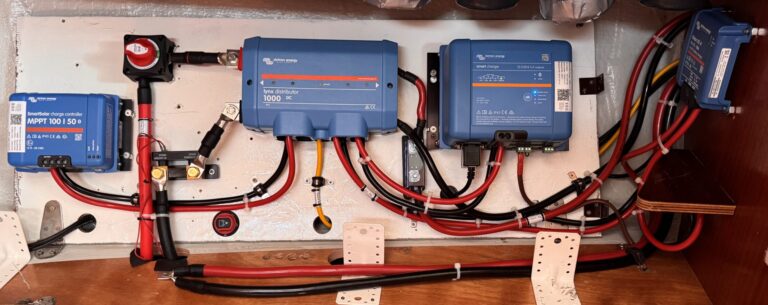
- [ ] Batteries: Tied down securely?
- [ ] Wiring: Organized or “bird’s nest”?
- [ ] Gas Locker: Overboard drain present?
SERIES CONCLUSION
The goal of a surveyor is to help you distinguish between a “Deal Breaker” and a “Bargaining Chip.”
Fair winds!