Sailboat Survey Guide – Chapter 3: Deck Structure and Hidden Dangers of Teak Decks
When you first step onto a sailboat, the deck under your feet is not just a platform to walk on. It is a complex engineering structure that holds the hull together, supports the massive loads of the mast, and keeps the interior dry.
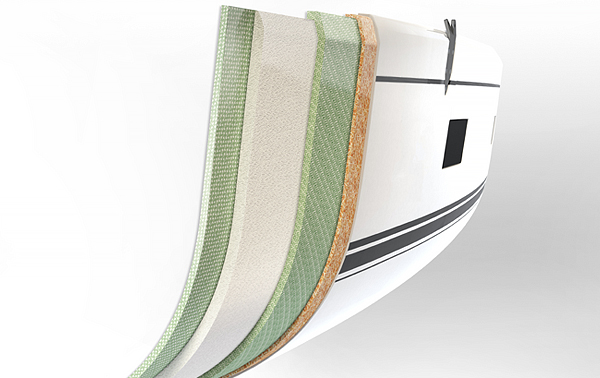
Most mass-production boats built in the last 40 years use Sandwich Construction to ensure light weight and panel stiffness. However, this structure carries serious risks, especially when covered with teak or when hardware is added incorrectly later on.
1. Sandwich Deck Structure: Advantages and Risks
Structure: Created by placing Balsa wood or PVC foam between two thin layers of GRP (fiberglass). This structure is much lighter and stiffer than a solid GRP deck.
Risk: Core Rot
- The Problem: Every hole on the deck (cleats, winches, tracks, etc.) is a potential water entry point. If the sealant (bedding compound) under this hardware fails, water seeps through the bolt threads into the core material of the sandwich structure.
- The Result: If the core is Balsa wood, it absorbs water, rots, and turns into mush. Surveyors describe this as “Sodden and Rotten.” When the core rots, the deck loses its stiffness and structural integrity.
- Detection: If there is a slight depression or dishing around deck fittings, it indicates that the core is wet, softened, and crushed under the pressure of the bolts.

2. Teak Decks: Luxury or Ticking Time Bomb?
Teak decks are preferred on sailboats for aesthetics and non-slip properties. However, when buying a boat over 15 years old, how the teak is mounted is vital.
A. Screwed Teak Decks
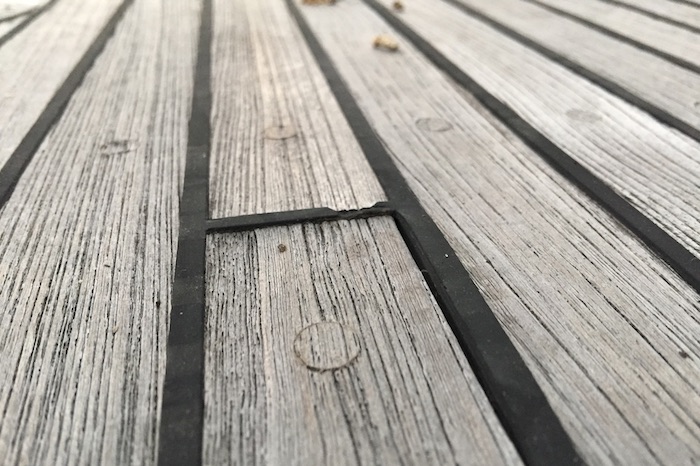
On older quality boats and many production boats, teak slats are attached to the deck with thousands of screws.
- The Danger: Each screw pierces the top fiberglass layer and enters the core material. Teak is soft wood and wears down over time. The wooden plugs (dowels) hiding the screw heads become shallow and pop out.
- Chain Reaction: When a plug falls out, the screw head is exposed. Water enters through the screw hole, seeps into the sandwich core, and spreads, rotting the core over large areas. This is often invisible from the outside; the teak may look fine, but the deck underneath is rotting.
- Visual Clue: If you see shiny screw heads on the teak deck or black rings around the plugs, the probability of water ingress is very high.
B. Condition of Caulking
The black sealant (usually Sikaflex) between the teak slats loses its elasticity over time and separates from the wood (debonding).
- Test: Does it open up when you press the edge of the caulking with your fingernail? If the caulking has debonded, water will enter here, travel under the teak, and find a way down through the screws.
3. Survey and Detection Methods
How do you detect these problems as a buyer or surveyor?
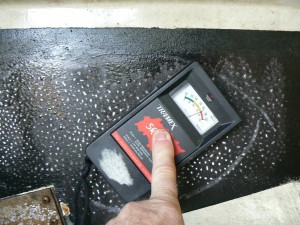
- Moisture Meter Limitations: Using a moisture meter on a teak-covered deck is misleading. The device reads the moisture in the teak itself, so it cannot show the condition of the fiberglass or core beneath.
- Internal Inspection (The Most Reliable Method): Go inside the boat and check the deckhead (ceiling).
- Moisture readings should be taken inside cupboards, the chain locker, or areas where the headliner can be removed.
- Water stains on the headliner, a musty smell, or rust on the nuts of winches are evidence of leaks from above.
- Hammer Sounding: When tapped with a plastic hammer, the deck should produce a “sharp” and “crisp” ring. If the sound is “dull” or “hollow,” delamination has begun. Also, if you feel a “crunching” sensation under your feet while walking, the core has separated.
4. Retro-fitted Hardware
Boat owners often add clutches (jammers) or organizers later to manage lines leading to the cockpit.
- Common Mistake: Factory-installed hardware usually has solid plywood or aluminum backing plates/inserts beneath. However, if retro-fitted hardware is screwed directly into the sandwich structure, the soft foam/balsa crushes when the bolts are tightened.
- Correct Installation: The sandwich structure must be drilled out, the soft core removed and filled with epoxy putty (potting), or a metal compression tube must be inserted. If this is not done, water ingress is inevitable.
2025 Perspective and Current Notes
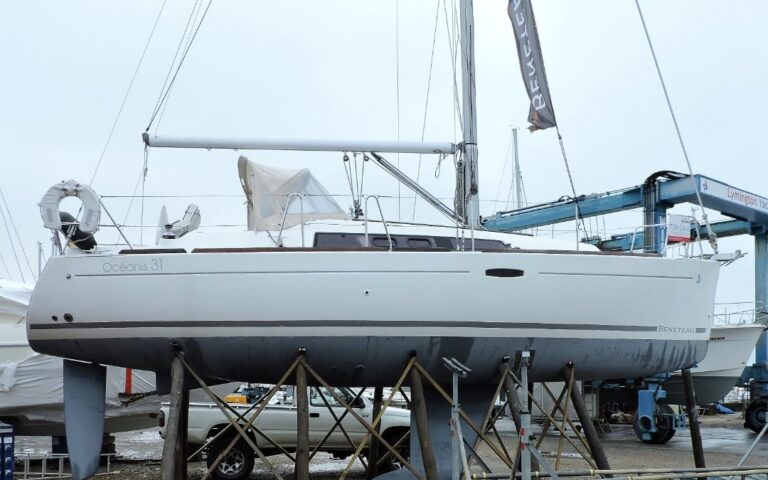
- Bonded Teak Revolution: On most modern sailboats (Bavaria, Beneteau, Hanse, etc.) produced today, teak or synthetic decking is bonded to the deck using vacuum or strong adhesives without screws. This eliminates the risk of screw holes. If the glue fails, the teak may lift, but this is a cosmetic issue, not a structural water ingress issue.
- Synthetic Alternatives: In 2025, synthetic teak (Flexiteek, Permateek, etc.) is very common. These materials do not rot, require no screws, and are virtually maintenance-free.
- Vacuum Infusion: Modern decks are now produced using vacuum infusion, ensuring a controlled resin ratio and reducing the risk of “dry spots.”
Summary Advice: If the boat you are considering has a screwed teak deck and the teak is worn (plugs missing or screw heads visible), factor in the possibility that the balsa core is wet and that repairs could cost tens of thousands of Euros.
📖 Chapter 3 Glossary: Terms and Meanings
- Sandwich Construction: A composite panel made by placing a lightweight core (balsa/foam) between two rigid skins.
- Core Rot: Decay of the balsa wood inside the sandwich structure due to water ingress.
- Bedding Compound: Elastic sealant used under deck fittings to prevent water leaks (Sikaflex, butyl tape, etc.).
- Caulking: The black elastic sealant between teak slats.
- Plug / Dowel: Round wooden piece hammered over screw heads to hide them on a teak deck.
- Compression Tube: A metal tube inserted into a bolt hole to prevent crushing the sandwich core when tightening.
Next Chapter: Critical Underwater Infrastructure: Keel and Rudder